21 Oct, 2026
How to Create a Taxi App in 2027? The Complete Guide (Niche, Cost, Regulations & Process)
Who would have thought that one day, taxi apps would be worth a billion dollars in the international market? According to recent…



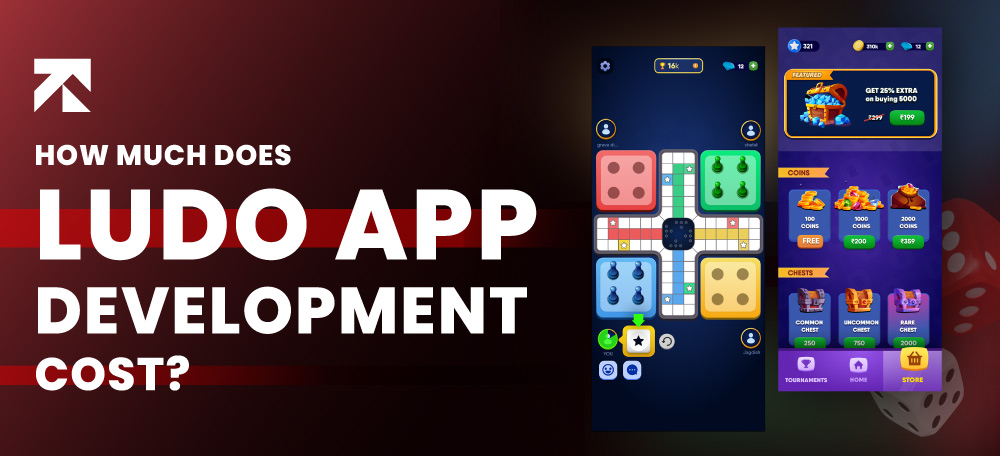
Ludo used to be just a game you’d pull out on family game night. Now, it’s a huge digital money-maker where people all over the world play together, chat, and spend real cash.
Valued at an impressive $2.72 billion, the Ludo app can be a lucrative opportunity for both indie and AAA studios.
No matter if you are up to build a casual game for fun or a sophisticated real-money gaming platform, understanding the budget required for it will make things a lot easier.
In fact, our game app development company charges between $15,000 and $100,000. It depends on the number of features, the tech stack, and the geographic location.
In this write-up, we will break down the cost to build a Ludo app, the factors, and the strategic optimizations one should know about.

Before diving into the copious details, you should first have a quick overview of how much it costs to build a ludo app. Your app budget should align directly with your desired user experience and long-term business objectives. Below is what you should expect based on the type of ludo game you want to build:
| Game Version | Estimated Cost | Estimated Timeline |
| Basic Ludo | $5,000 – $15,000 | 6 – 10 weeks |
| Standard Multiplayer | $15,000 – $40,000 | 3 – 4 months |
| Advanced / Real-Money | $40,000 – $100,000+ | 4 – 6+ months |
Remember that a Ludo game is a bit of a double-edged sword. On the surface, the rules are simple, but the infrastructure is required to keep thousands of players moving tokens across a board simultaneously. All that without lag, glitches, or cheating is a complex engineering feat.

What do you think is the reason that makes some ludo apps feel like a premium experience while others feel clunky and prone to crashing?
It mainly comes down to factors like architecture and foresight built into the project. These are the reasons why apps have a stable, secure, and engaging environment.
Simply put, there are certain direct and indirect factors associated with your technical, creative, and operational choices that affect your overall ludo app development budget.
For those planning to build their own ludo app, understand that such factors will help you invest wisely and determine your total financial commitment.
Ludo may be simple, but the features inside make it quite competitive. The basic local multiplayer game is cheap and starts to get a lot of features.
However, when you add the online multiplayer, you get the ability to create private rooms, voice and text chat, and daily challenges.
All of these need some custom coding and extensive testing to ensure they function harmoniously without causing lag.
One of the most important cost drivers is where your application is going to be hosted: either iOS, Android, or both.
If you choose to be native, you will be paying for two applications, which comes out to paying twice for the same development of your app.
Nowadays, most developers prefer to use cross-platform development frameworks such as Unity or Flutter, which ensure a single code base.
This will be less expensive, but still needs to be optimized by the experts to maintain the flow of the game on each device.
To enable real-time data exchange, you need a powerful and high-performance backend for a Ludo game.
If you’d like to enable thousands of players to play simultaneously without any dice rolls stuttering or users dropping out, you’ve got to invest in top-quality server architecture.
When it comes to backend planning, this results in a poor user experience and extremely costly emergency fixes later on.
Creating high-quality, bespoke 2D or 3D graphics, themes, and menus is a skill that demands talent.
If you opt to go with a generic, pre-made asset, then you may end up saving money, but you also run the risk of your app being a copy of all the other Ludo games out there.
A great-looking app is one that has a unique visual identity to it—this is what makes it stand out from the competition.
For Real Money Gaming, your budget increases by a multiple. You’re no longer creating a game but a financial platform.
This includes implementing secure payment systems, anti-cheat algorithms, KYC compliance, and robust encryption.
In order to protect your user assets, you have to allocate a big chunk of your budget for strong security.
At times, a gamer desires to enjoy the game, but they do not have any buddies online, or a player leaves the game.
To keep the game moving, you need to develop smart AI bots that can take over. Just ensure that it plays fairly.
Besides that, ensuring that it is able to mimic human decision-making is not as easy as it sounds for an amusing UX.
Following that, the more advanced the AI, the more that any coders or programmers put into the logic and behavior coding.
Different jurisdictions may have different laws or regulations regarding app launches that cant be overlooked.
Specifics of gaming laws, particularly when it comes to real-money applications, need expert legal advice.
It can stretch your Ludo app development expenses. However, you will find it useful to be closed down due to regional gambling or data protection regulations.
Your Ludo game will require a separate team of QA to ensure the game works on different devices, screen sizes, and web connections.
Having a cheap app is likely to mean that it is not well tested and has a low rating on the app store, which can cause churn.
If you invest a lot of money in strict testing, this is an investment in your app’s reputation and longevity.
Lastly, geographical factors of your development team will be one of the most significant variables.
The rates of a leading agency in a big tech hub will be far higher than those of a boutique or experienced freelancer in other parts of the world.
Although a lower cost is attractive, make sure you’re dealing with a team that has experience in gaming.
Otherwise, you could end up making some serious mistakes in the development process that cost you dearly.

If you want to build apps that feel polished to perfection, you should work with a well-defined strategy.
To avoid falling apart after launch, everything inside your development process, from ideation to monetization, should be flawless.
In fact, with a clear roadmap, you will almost avoid overspending on revisions and fix-it tasks. Our experts have broken down the development process into clear, manageable phases.
Through this means, you will have complete control over your budget, and every dollar you invest goes toward creating a high-quality experience.
To build your own ludo app, you must have a straightforward plan in hand. Here, your tech experts identify your audience, understand your competition, and determine your revenue models.
What we suggest is to make a solid investment in this stage of development. It later saves you from a lot of unnecessary disappointments.
More than that, you will have clarity on what features are an absolute must and what can be done later.
Something more interesting here is that the price impact is quite lower in this phase. But saving money later down the road.
Associated Cost: $1,500 – $3,000
You will spend money on designers to create wireframes, board layouts, token skins, and user flows.
The design phase is a crucial aspect, because you will know that your game is usable and pretty.
Keep in mind that gamers are visual, and if the interface is clunky, outdated, or confusing, they will uninstall immediately.
Quality design will provide a sticky experience with the player, which will keep them coming back to the game.
Associated Cost: $2,000 – $4,500
Your creative design minds will take your game idea to reality using the desired engine, either with Unity or the Unreal Engine.
They prototype the abstract physics of the dice throw, the motion of the pieces, and the fundamental rules of the game.
To achieve true cross-platform functionality on iOS and Android, your team should focus heavily on this step.
Cost Associated: $4,000 – $5,000
Consider this step the engine room of your Ludo app. You have to configure the server-side of things to support real-time multiplayer, leaderboards, and user profiles.
The two players in different countries are paying for the knowledge required to make sure that when they hit roll, the server gets it without delay.
Back-end architecture plays a crucial role in preventing cheating and ensuring the game’s fairness, particularly when real money is involved.
Cost Associated: $3,000 – $8,000
Research shows that gamers are quite sensitive when it comes to gameplay. Even a minor hiccup while playing can discourage them.
To ensure a flawless experience, rigorously test your app in terms of bugs, connectivity, and performance.
Moreover, test your app on different screen sizes, internet speeds, and OS versions by the developers.
This is a big no-no; if you miss it or cut corners, your reputation in the app store could be in jeopardy in just a few days.
This budget is for you to get the professional testers needed to make your app ready for your audience.
Cost Associated: $1,500 – $4,500
Last but not least, developers will deploy your app on the intended platform, whether it be an app store or playstore.
The game development cost in this step is mainly submission fees for the app in the store, App Store Optimization, and setting up the server.
For post-launch support, such as resolving bugs that arise, providing updates for new OS versions, and dealing with the scaling of the server, you will require a separate budget.
Cost Associated: $1,500 – $3,000

No doubt you will meticulously plan your Ludo app development budget. It spans development hours, design graphics, and much more.
However, there are certain hidden expenses that inevitably creep up. Once your project is underway, this classic trap shows up, leaving developers disappointed.
Those who remain prepared with this reality will avoid a lot of setbacks later. Unlike that, leaving such small, ongoing, or unexpected costs potentially threatens your success.
To help you make the most of your investment, we have shared the hidden costs to build a ludo app you should not overlook. Check them all out below, one by one:
As you begin, you require a small number of servers. However, if your game goes on the rise, your hosting fees will go up as well.
When you use cloud-based services, such as AWS or Google Cloud, the more users that are accessing the service, the more you have to pay.
A number of developers do not optimize their server configuration in the beginning. As a result, there are unanticipated high expenses during peak traffic times.
It is probably best to have social media login, advanced analytics, push notification services, or special payment gateways built into it.
These tools are convenient, but cost you a fortune if overlooked. Your developers won’t find it an easy feat.
Simply put, if free tiers eventually get phased out. There could be a need to suddenly pay recurring monthly charges for each and every third-party service.
It’s hard to recall that there are fees associated with the Apple App Store and Google Play Store.
In addition to the initial developer account fees, there are annual fees to renew the developer account.
Also, both of these platforms charge a percentage from your in-app and real-money wagers.
If you didn’t consider them from the outset, these transaction fees can take a significant bite out of your profits.
Regardless of the best team of QA personnel, bugs inside your app are inevitable and will be found in the wild.
If something is found that users can’t log in to or causes the game to crash, you require a timely response from the developer.
This on-call maintenance, particularly if the urgent, high-priority fix you need to deploy is to prevent your users from being lost.
Technology moves fast. Whenever Apple or Google releases a big OS update, your game might not work well on newer devices.
To keep things compatible and smooth for gamers, it’s a continuous effort that needs to be made.
It takes a cycle of constant updates to make sure your game is working on the latest hardware releases, year after year.
Creating a Ludo game application is nothing more than a ghost town if there are no players around to play it.
For that purpose, your marketing enthusiasts have found a different way to target new users and retain the existing ones.
Either be a social media ad, an influencer partnership, or an app store search ad, all can grow your custom ludo app development cost.
Without organic growth, you have to be pouring money into marketing continually in order to maintain a healthy player base.
As an app that deals with information from users or payment processing, you are a target for cyber threats.
To keep your platform secure, periodic security audits, penetration tests, and updates to your data protection measures are necessary.
Staying compliant can incur large fines, ultimately a hidden cost that is a required form of insurance.
When you choose to enter a new game market area, translation of the text is not sufficient. You must tailor the UI to various screen layouts and be sure that the game meets local cultural tastes.
Beyond that, Ludo app developers should affirm that the Ludo game can operate on different regional servers.
It takes a lot of time to test and localize the application, and extra server space that is often ignored in the initial cost estimation.
When you reach thousands of players, you will get hundreds of emails and messages for any game-related issues.
It could be anything from logon problems, payment disputes, technical glitches, or more you can’t think of now.
Remember that these can’t be ignored. At some point, you’ll need to hire a dedicated team that takes care of user queries.
Otherwise, you will have a huge fall in your app store ratings, and it will cost you much more than it costs to hire support staff.

If you think that optimizing your Ludo application development cost simply means hiring someone with low charges, you might be in a misperception.
Besides that, there are several other best decisions to take in order to balance your development budget without compromising your quality standards.
Don’t compromise your vision just because you find yourself staring at a quote that exceeds your resources. Simply change your approach to the build.
Choosing the right technology stack, focusing on iterative releases, and prioritizing core functionality can effectively optimize your costs by half.
Drawing on personal experience, I have shared the best practices that work for both indie studios and industry giants.
Did you know that an MVP development can slash your overall cost by almost 40% of its actual value? That is pretty interesting, yet the most effective way to optimize your budget.
Your goal should be to avoid coding a perfect app at a time. Focus on a Minimum Viable Product having essential features only.
For instance, within a ludo game you should target the game board, the dice mechanics, and the basic multiplayer functionality.
By releasing the lean version of your app first, you can get it into the hands of real users faster. They provide you with feedback that will make or break your success.
The creation of separate native applications for Android and iOS is, in a way, the payment of twice the same effort.
There are a number of cross-platform frameworks available, such as Unity, Flutter, or React Native. They make it possible to write your code once and deploy it to both platforms seamlessly.
As a result, you save a lot of time in the development process. Other than that, there is a lower debugging workload by half, that too with effortless maintenance.
It makes no sense to invest the 40 hours it takes to create a sound effects engine or the standard UI menu from scratch.
Similarly, hiring a ludo app developer to build it for you never seems like a wise choice. The same goes for sound effects engines and the standard UI menu.
There are thousands of solid-tested assets that can be found in places such as the Unity Asset Store. Utilize this particular set of mechanics rather than re-inventing the wheel.
Avoid spending too much money on a high-end dedicated cloud server before you have any users.
Use scalable cloud services, such as AWS and Google Cloud, as you need them, with flexible payment models.
These are the platforms that will be capable of being used without requiring much investment and can easily expand as the number of players increases.
You can control your infrastructure dynamically. It implies that one dont have to spend money on power for a server when it’s not being used.
It’s good and a huge financial investment to hire a full-time in-house team, as well as their salary and benefits, and office space.
However, most businesses prefer hiring skilled freelance developers or niche boutique agencies.
Don’t outsource the core of your project, just a specific task that you feel like they might ace better.
Remember that expert assistance is utilized only when necessary. It thereby ensures a high-quality service level and keeps costs considerably low.
Using automated testing tools in your development process will allow you to detect bugs and logic errors early.
Unlike manual testing, it is very time-consuming, costly, and prone to human errors, which takes weeks in total.
The initial investment needed to set up automated tests can be a bit heavy. However, the cost savings are enormous.
You can get rid of all of the huge costs of fixing deep-seated issues after the game has been deployed
If your code is segmented into small and independent modules, it is much easier to manage and update your code.
For changing payment methods or adding a new game theme, a modular structure means that your developers can update one part of your game without affecting the rest.
This helps stop the spaghetti code that is a silent budget buster that doubles every future update and doubles the time required.
Once your Ludo app development is done and dusted, you should immediately start promoting it to target users.
Don’t just look to ads for virality; embed something in your game that users can’t help but use and come back for more.
Provide rewards such as invite-a-friend, prizes for sharing, and getting notifications for re-engagement.
As a result, you will enjoy organic growth and loyalty as well if your ludo app provides a better experience, ultimately, more revenue.
Unlike a healthy app, a broken app is more expensive to repair. One has to plan more strategically, do regular maintenance checks, security audits, and OS updates.
Missing out on anything leads you to large fixes later that eat almost all of your app profits. For that purpose, we recommend adhering to proactive maintenance.
In this way, your app will continue working flawlessly for years. No sudden, outrageous payments.
To be precise, developing a Ludo application typically costs between $5,000 to $25,000. It can go up or down based on your app complexity, features, and platform choice.
First and foremost, you should understand the cost factors involved, such as the number of features, backend infrastructure, and compliance.
Remember that the true success of your project hinges on technical execution, like how it looks and works. Beyond that, it requires low-latency performance, robust security, and a scalable architecture for users during peak hours.
If you are looking for someone with technical expertise, diverse experience, and that too with affordable rates, hire us. We will help you navigate the nuances of game engine integration, payment gateway security, and app store.
With a proven track record in mobile game development, 2D/3D Unity expertise, and a deep understanding of MVP-to-scale strategies, Trango Tech is the partner you need.
Yes, it is necessary to have a legal license to start a Ludo game app. The requirements for a license will vary depending on your monetization model, and even more, depending on the region. When you are creating a basic, sponsored casual game, there is little regulation. If your Ludo app is a real-money game or cash-based tournament, however, you’ll almost certainly have to obtain particular gambling or gaming licenses to play legally. Talk to legal advisors in the markets you are looking at to be on the safe side.
Most of the successful ludo apps are using a hybrid monetization model, which helps them to get the maximum revenue. The Freemium model is a time-tested one where the base game is free, but users buy virtual coins or special tokens through in-app payments. Furthermore, offering players extra moves or coins for viewing a video advertisement is a very powerful retention tactic. With tournament fees as a steady source of income and a premium option for ad-free play, you will enjoy maximum ROI.
Absolutely. In order to stand out in a saturated marketplace, customization is among the top strategies that you should consider. Themes, custom avatars, animated dice, and seasonal skins give you the opportunity to create a different board experience for your users. While developing it, you should share your ideas, visions, and aesthetics with your design team during the early stages of development because custom graphics and superior graphics animation do affect the development cost and schedule.
In online games, player trust is the basis of fairness. To avoid cheating, a strong server-side random number generator for generating dice values is required, and the client-side app can’t affect the random number generation. In addition, adding end-to-end encryption to data transfers and anti-bot security measures will help defend your ecosystem. If your application is a money-related one, it is very important to have regular security reviews to discover and fix vulnerabilities.
For a lot of companies, it is the better and cheaper option to outsource to a reputable development firm. Establishing an in-house team can be expensive, as it involves hiring employees, paying their salaries, providing benefits, and setting up the office. Instead, it means engaging a team of experienced game designers, back-end engineers, and quality assurance professionals who have streamlined their processes, resulting in a quicker time-to-market.
The launch is just a first step. After launch, you will need to support it with regular updates that will ensure the app remains compatible with the latest versions of the operating systems (Android, iOS), etc., bug fixes reported by users, and new features according to user feedback. Also, give consideration to the costs of server hosting, which can be proportional to the number of users you have as well as to your active marketing activities, so that your acquisition expenses are kept low and the retention rates high.
Yes, and it really is a good idea to do so. A community has to be built, and user retention improved to meet requirements such as real-time chat, friend invites, and social media integration. These features enable players to engage with each other during games, making them a social experience. But, these integrations must be accompanied by tools for moderating the content, as it may not be suitable for everyone, and the app should be a safe place for everyone.
Selecting Trango Tech ensures you get a partner who understands the gaming industry and is technically sound. With years of experience in game mechanics and back-end architecture, their team is well-versed in building apps that will perform and scale well from the start. With Trango Tech, you reduce your development risks, access cutting-edge technology, and have a long-term partner who will work with you to execute your particular business vision into a market-leading product.

Who would have thought that one day, taxi apps would be worth a billion dollars in the international market? According to recent…

Developing a new application comes with unseen obstacles, like concept failure, financial investment, or technical feasibility. Before investing your hard-earned money, ask…

What is Mobile App UI Design? Did you know that more than 90% of people globally spend their time using mobile apps?…
Fill out the form, and our app development team will reach out to you shortly.
Let’s turn your idea into an app that drives engagement, increases revenue, and sets you apart from the competition.
Driving Change
Through Technology