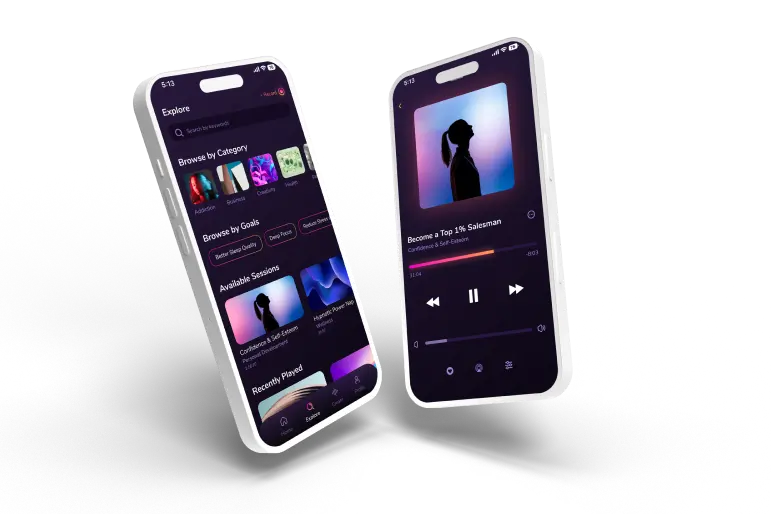
The 6 steps involved in creating a taxi app: choose app niche, build method, UI/UX design, development, QA and app launch.
The global ride-hailing apps are projected to be worth $ 188.60 billion in 2026 and are expected to breach >$200+ billion by 2030, with user usage rate.
Around 36% of US adults use taxi apps like Uber (14 million rides), Lyft (2.3 million rides), Bolt or CruZeMe on a daily basis.
Adhere to PCI DSS, TLC, WCAG 2.2 AA, AB5 and data privacy laws for taxi app development.
Critical features include user registration, live GPS, fare estimates, secure payment options, SOS, profile verification and an administrative interface.
Who would have thought that one day, taxi apps would be worth a billion dollars in the international market? According to recent stats, ride-hailing apps are expected to be worth $188.60 billion in 2026 and exceed $229.98 billion by 2030. This taxi app development guide explains how to create a taxi app from idea inception to final launch, core features, tech stack, development cost, design, UX and monetization strategies.
To develop a competitive taxi app, choose a mobile app development company that champions their programming games, then pick the in-demand app niche and type, build the architecture pillars, choose the city to run your app, set a budget to compete with leading taxi or ridesharing apps, and adhere to US compliance requirements like PCI DSS, WCAG 2.2 AA, SOC 2 and data privacy laws. The average taxi app development spans around $10,000 to $60,000+, and the range may vary depending on app complexity. Follow this guidebook to create your own taxi app and make it big.
Taxi App Market Value
About 36% of US adults use taxi apps on a daily basis, among whom 2.3 million people use Lyft every day and 14 million Americans heavily rely on Uber for daily trips. Uber is especially a large contributor in the global market of taxi apps, with 42 million Uber rides per day. Furthermore, the overall ride-hailing app annual growth rate is about 5%.
Quick Answer
This app connects drivers with passengers and offers reliable transportation service throughout the city. In this blog, learn how to create a taxi app like Uber, Lyft, Bolt or CruZeMe with easy-to-follow development steps. The cab app building process includes market research, selection of business models, app type, niche, and build method, designing, developing and testing. Usually, MVPs charge $10,000 to $15,000, standard business apps $15,000 to $30,000+ and complex enterprise apps $30,000 to $60,000+.
What is a Taxi App? The Three-Part Ecosystem
Getting late for the office and not having time to find a cab in a population of 342.6 million in the US? This is where the need for taxi apps arose and they maintained a 24% user penetration rate in 2026. Taxi apps are digital platforms connecting riders with drivers, with the convenience of booking from home. The taxi app functions as a three-part ecosystem consisting of drivers, passengers and an admin panel framework. Passengers raise the demand for a ride, drivers offer their services at a certain price, and administrative employees in the back ensure your journey remains smooth. These three user roles are interconnected through live synchronization for booking the ride, GPS navigation with the Google Maps API, and fleet management for vehicle maintenance and the ride dispatch system.
How to Create a Taxi App in 2026? 6-Step Approach
Make a taxi app using our top taxi app development firm’s strategic approach, starting from app discovery, defining the business model, tech stack, ideal features, designing the user experience, testing and launching on App Stores. Partner with Trango Tech to build a highly scalable app in the USA. The average time the taxi app development process takes spans between 3 and 9 months. Before we jump into mesmerizing features and unique value, let’s take a look at each step below:
Step 1: Discovery (Choose App Type and Niche)
First, conduct market research and explore top taxi apps, such as Curb, Uber, Obi or Arro. Identify the gaps in current apps that are worth addressing. Define the business model, either fleet, hybrid or aggregator model as per company strengths.
The taxi market is already saturated; it is important to be clear about your targeted app niche and type. Choose your app niche from these options: standard city taxi, women-only, EV ride, carpooling, shared rides, luxury or chauffeur service app.
Then choose the app type, such as ride-hailing, ride-sharing or on-demand transportation service. These steps help you create a taxi booking app and align your unique identity with core business values.
Step 2: Choose Your Build Method
There are typically 5 options to build a taxi booking app, including ready-made solutions, AI-assisted (no-code), independent contractors, technical partnership or custom app development.
You must choose an option before writing a single line of code. Have a quick comparison between the five for better understanding.
Development Option
Cost
Control
Risk
Best For
Freelancer
$15,000 to $45,000
Medium
High (Challenges like technical growth or reliability may occur)
MVP (Minimum Viable Product) development
Technical Co-founder
$0 (Sweat Equity)
High (Shared)
Medium (Mutual dependency)
Startups seeking funding
Ready-made Solutions (White-Label)
$3,000 to $25,000
Low (Accept, it is what it is)
Low to medium (as it’s already made, comes with few limitations and some controls)
An easy market entrance with standard features
Agency (Custom mobile softwares)
$10,000 to $60,000+
High (Managed by company)
Low (Partnership with industry experts)
Booming growth with support and quality
AI-assisted
(No-code / Low-code)
<$5,000
High (Independent)
High (Scaling and systematic limits
Non-technical entrepreneurs looking for prototypes
Step 3: App UI/UX Design
Now design the app and define the user experience. Build a taxi app while keeping in mind that it’s a two-sided marketplace model. So, design the app while keeping both customers’ and sellers’ perspectives in mind, emphasizing speed and visual clarity.
To ensure a seamless booking experience and user flow, create wireframes for a booking service with minimal distractions and unnecessary features. For a clear screen for both riders and drivers, prioritize simple interfaces.
Additionally, options like fare calculation, route details or ETA (estimated time of arrival) prediction should be clearly visible on screen before ride confirmation to reduce ride cancellation rate. Baymard Institute research concludes that 88% of online users are less likely to use your app due to a bad user experience.
Step 4: App Core Development
Select React Native and Flutter frameworks for cross-platform app development for iOS and Android devices. Choose the right tech stack, as it will directly impact your app capabilities and runtime.
For backend servers, use Node.js and Java technologies to address project architectural needs, handle live data, computational efficiency and development timeline. Use cloud computing for uninterrupted performance and add AI-based features for smart ride matching.
Next, integrate essential 3rd-party APIs such as Stripe for payment processing, Google Maps for live location, Twilio for SMS updates, Firebase for live data synchronization, and Google Analytics to track app performance.
Step 5: Quality Assurance, Testing and Compliance
Once the app is developed, ensure its quality with robust security and testing protocols. Run audits for process flows, payment gateways, and GPS. Make sure apps run well in weak-signal areas.
Carry out fundamental testing related to functionality, performance, app load, push notifications, device and security across both passenger and driver interfaces.
Investigate all crucial regulations and compliance that need to be followed for taxi app development, such as PCI DSS, SOC 2, accessibility or data privacy laws. Meet the local and TNC regulations for driver licensing and other background-checking requirements via the Checkr platform.
Step 6: Launch and Post-Maintenance
As the app passes all testing phases, ASO and meets the guidelines of the Google Play Store and Apple App Store, deploy for app release.
Market your app in the respective region and run advertising campaigns for app marketing. For example, referral discounts, coupons or rewards. Start from one city, then jump to multiple locations and cities as app or service demand grows.
After app launch, keep a vigilant eye for post-maintenance concerns. Regularly update apps, improve features, meet security standards upgrades, and apply OS updates to stay competitive and proactively gather feedback in the first month to maximize app performance.
Trango Tech offers 3 months FREE maintenance service after app development. To ensure a seamless user experience after this period, you can choose an app maintenance plan.
Choose Your Niche and App Type
There are five main ideas for starting a taxi business app; you need to choose your niche and app type to create your own taxi app. Often, successful business people start with a single app type, a single niche, target one city, lead their services there, and add other areas later.
Niche App Type
Target Audience
Main Revenue Source
Primary Focus
Standard City Taxi
Daily travelers
Higher price
Many drivers and fast dispatch
Women-Only Ride-Hailing
Female passengers
High fare rates
High security with strict personal identity authentication
EV Ride Service
Environmentally aware riders
Corporate partnerships
Battery operational logs
Luxury & Chauffeur Service
Officers or VIPs
High fixed rate and commercial contracts
Vehicles standards and professional drivers
Carpooling & Shared Rides
Low cost traveller or for Long trips
Cost sharing and platform booking fees
Multiple stops route optimization
Standard City Taxi Booking
How to create a taxi app? Use baseline tech complexity, a highly accurate GPS, and live pricing to build a standard city on-demand booking app. About 18% of USA residents use eHailing apps for taxi cabs, with a driver and a passenger. Customers raise the demand, drivers offer their price or directly accept the ride request, and the platform earns via commission.
Popular US city taxi booking apps include Curb, Arro and CruZeMe.
Women-Only Ride-Hailing
These apps are solely made for women, focusing on safety with standard tech depth for additional verification. A popular example of ride-hailing app development is the SheRides app; it connects women riders with female drivers. More focused on security than lower fare or ride speed.
Popular US women-only ride-hailing apps include Uber (20% women drivers), Lyft and SheRides.
EV Ride Service
The EV ride service connects eco-conscious passengers with an electric vehicle fleet service, with approximately 23% using electric vehicles. Having medium system complexity with charging integration, these eco-friendly apps are more focused on smart journey planning, keeping a balance between user path and vehicle battery level, and charging units.
Popular US EV ride service apps include Alto Ride Share, Circuit and Waymo One.
Luxury & Chauffeur Service
It is a premium booking app type that focuses on passenger comfort and medium tech sophistication with advanced booking, regardless of higher fares. As per recent studies, about 12% of people in the United States prefer using luxury taxi service over public transportation.
Popular US luxury & chauffeur service apps include Blacklane, LUXY Ride and Wheely.
Carpooling & Shared Rides
These are P2P ridesharing apps made with highly complex path selection logic. About 6% of US adults have frequently used cab-sharing apps within the past year. A good option for both long-distance travel and daily office commute.
Popular US carpooling & shared rides apps include Uber, Lyft and sRide.
How to Create a Taxi App like Uber, Bolt or CruZeMe? (Apps to Learn From)
Create your own taxi app with the help of already existing top-notch taxi or ride-hailing apps. In order to build one, you need to understand their business model, earning criteria, app architecture and unique selling points (USP). Each of the below-mentioned apps has proven its mettle with differentiators. For example, Uber introduced new types of cab services such as food delivery or Uber Eats, Bolt offered highly affordable service, inDrive gives price control in the hands of users, and CruZeMe focuses on uncompromised reliability and E2E digital logistics modernization.
Have a look at the structural differences between each mobility app.
To build a taxi business app for riders, make sure to focus on seamless reservations, pricing transparency and ride safety. Options like digital wallets, an SOS button, online payments, and tracking the driver’s live location provide passengers peace of mind.
Driver App Features
For drivers, prioritize clear metrics related to fuel management, an easy-to-understand earnings dashboard, and quick status-switching options. Having options like trip tip breakdowns helps in driver retention.
Admin Panel (what is actually needed to do)
Build a taxi dispatch app considering the admin dashboard and their responsibilities, such as driver verification, commission or pricing controls and dispute resolution. Offer 24/7 quick service for complaints; the help center team should focus on resolving customers’ requests on priority to maintain platform dignity and market status.
Admins have complete access to both users’ interactions as customer support agents. They can view complete communication between the passenger and the driver for dispute resolution and have fare breakdown records for transparency and billing verification, in case of refunding to riders or penalizing drivers for behavioral or safety concerns raised by customers. Administrative employees can adjust profit distribution easily within a few steps.
Design & UX: What Keeps Riders From Switching Apps
Mark my words, if your app doesn’t appeal to users, either drivers or passengers, none of them will stay longer on your app. Your application has to meet or exceed the rideshare market’s enchanting experience for long-term user support and retaining drivers, as it shows app reliability and helps build passengers’ trust in your app.
User experience plays a role in psychological attraction and helps user retention. If you succeed in developing a simple interface with an effortless booking flow, live location clarity, transparent pricing, and good speed, then cheers to your upcoming market-leading cab booking application.
You must keep in mind the US Government mandates when creating a taxi app like Uber. For your convenience, I’ve discussed all crucial requirements below:
The mobile app interface must comply with WCAG 2.2 Level AA accessibility standards.
Highlighting the accessibility requirements below:
Accessibility & Inclusive Design
Your taxi app should be user-friendly for older users, AI-powered, with advanced safety features, smooth rider communications, and loyalty programs for daily users, such as rewards, coupons or discounts.
The UX/UI standard industry requirements are listed below:
Standard body text should be a minimum of 16px base size (WCAG allows up to 200%)
Headings should be a minimum of 0.12x the font size.
WCAG text spacing with respect to font size should be as follows: line spacing 5 times, spacing between 2 paragraphs should be at least 2 times, letter spacing should be at least 0.12 times, word spacing should be 0.16 times
UI components (buttons/fields) should have a minimum 3:1 contrast ratio on the display screen.
Clear field boundaries to input commands (WCAG allows a minimum 3:1 contrast ratio)
Tech Stack for a Taxi App
There is no doubt that Flutter is the ideal framework for a taxi app development tech stack. This core architecture helps build cross-platform apps from one Dart codebase for both Apple and Android app development, typically ranging from $30,000 to $80,000 for standard business apps and taking 12 to 20 weeks to deploy.
For backend and infrastructure: Firebase, Ruby on Rails, FCM, AWS and Golang.
Taxi Regulations & Compliance by Country
How to create a taxi app with adherence to compliance? Taxi app regulations vary from region to region and country to country. The United States mandates adherence to TLC for New York City, California mandates AB5, Canada enforces DPWRA, Germany has its own Directive 2024/2831 law, and the United Kingdom has 2021 Supreme Court orders.
Country / Region
Compliance
Core Purpose
US
NYC TLC
To address public safety and security concerns, especially women and teenagers
CA
AB5
Enforces ridesharing companies to treat their drivers as daily employees rather than independent contractors
Canada
DPWRA
To maintain labor rights, ride transparency and safety programs for gig workers
Germany
Directive 2024/2831
To improve the transportation process, algorithms flows and employment status or workers
UK
2021 court ruling
To call ride hailers as official workers instead of independent workers
Payment Data Security (PCI-DSS)
Payment Card Industry Data Security Standard (PCI-DSS) compliance is mandatory for all regions and countries. It enforces the need for secure payment processing and smoother transactions for drivers via riders’ credit cards.
How Much Does it Cost to Build a Taxi App?
The average cost to build a taxi app ranges between $10,000 and $60,000+. The overall app price may vary with app complexity, number of features, integrations, compliance requirements, project needs and your budget.
Build Type
Cost Range
Development Timeline
MVP (basic)
$10,000 to $15,000
2 to 3 months
Standard business app
$15,000 to $30,000+
4 to 8 months
Enterprise grade app
$30,000 to $60,000+
9 to 18+ months
Wanna learn in detail about the cost breakdown of a taxi app, including prime cost factors, feature share in overall cost, cost breakdown as per each development stage, hidden costs, and optimization strategies? Then check our blog: Cost of developing a taxi app.
Monetization Models
Follow the following monetization strategies to make money from your taxi application:
Commission per ride is tied to each order completion, with a certain percentage cut as a source of revenue, usually ranging between 12 and 30%.
Driver subscription fees include daily, weekly and monthly cuts of a certain amount from their earnings.
Surge pricing depends on seasons or hours, with dynamic pricing helping companies generate income.
In-app advertising also helps in earning as a passive income source via sponsorships or brand endorsements.
Launch, Marketing & Scaling to New Cities
You may hire a highly talented team or custom app development company to build your app, but the call is yours. Use your business mind sharply and wisely target a single city first to launch your app for services. With time, you may spread your wings and set global expectations.
At the beginning, offer referral programs. People love gifts, offers, free rides and more. It sounds like a game or more of a challenge to them, which people love to participate in. With these loyalty programs, you can attract more users and retain existing ones by creating a continuous cycle of engagement, which will ultimately lead to organic growth.
Geo-targeted ad tactics target local audiences on social media platforms like Facebook, Instagram or TikTok for your specific city. It helps target your ideal audience in the respective city for an app launch and shows ads where they are browsing.
A Real Launch Example of a Taxi App
Take an example of CruZeMe, a ridesharing platform. Trango Tech built a custom mobile app for CruZeMe; the project goal was to connect with passengers in urban and suburban areas.
The challenge was to build an app that allows live GPS tracking, updates ride progress with each passing second, provides safety and leads the market with high user engagement. Trango Tech used advanced technologies, like Flutter, Jetpack Compose, Laravel, AWS, GCP and Azure, to develop user-friendly and highly scalable ride-hailing apps.
The project turned out to be a huge success. The CruZeMe app got 140k+ downloads in the starting months, completed 6,000+ rides with an active 91k user base and maintained a 4+ rating on App Stores.
Post-Launch: KPIs & Success Benchmarks
Measure the following Key Performance Indicators (KPIs) as success metrics for a taxi app:
Driver fill rate shows the number of times ride requests were accepted; it shows supply chain needs. Set a target from 85 to 95%.
Average time to match shows the dispatch algorithm; efficiency is measured at under 5 minutes.
Ride completion rate shows the total number of rides completed without any cancellations.
Driver churn rate shows the number of drivers who left your app, indicating supply chain resilience.
Rider repeat-booking rate shows app acceptability by users and sets market value.
Common Mistakes to Avoid
The common mistakes that should be avoided to create a taxi app like Uber are related to booking flow and dispatch logic.
To maintain an organized booking flow, avoid unrestricted future bookings to show correct driver availability, control undefined locations for smooth pickups, and keep price estimates transparent for users.
The well-defined dispatch logic should avoid dependency on close matches only, limit the automated rejection timers or update time to a certain acceptable range, and keep nearer drivers’ option to offer a ride rather than treating only one as a driver fairness rule.
Build Your Taxi App with Trango Tech
Create your own taxi app with Trango Tech! We have 20+ years of experience creating mobile applications, have served 1,000+ clients, and deployed 500+ apps on both iOS and Android platforms. Creating a taxi app is no longer your hustle. Our expert team of 250+ engineers and developers, 20+ designers, and 30+ project managers will look after your app development, from project discovery, design, coding, and QA to app launch.
Our portfolio includes a big name like the CruZeMe ride-hailing app. This taxi app got 140k+ downloads, completed 6,000+ rides and maintained a 4+ rating on App Stores.
Commonly Asked Questions
To make a taxi app, use these steps. First, start with market research, choose your app niche, type and business model. Choose your build method; custom app development is the best option. Design the UX/UI, build wireframes and prototypes, write code, and integrate 3rd-party APIs. After app development, conduct QA and run rigorous tests. Launch the app on app stores and observe very closely for the first few months.
The average cost to create a taxi app ranges between $10,000 and $60,000+. In this range, simple apps range from $10,000 to $15,000, standard business apps from $15,000 to $30,000+ and complex enterprise apps from $30,000 to $60,000+.
On average, building a taxi app takes 3 to 9 months. In this, MVPs take 2 to 3 months, moderate apps take 4 to 8 months, and complex apps take 9 to 18+ months for development.
Yes, Trango Tech looks after your complete app development process to launch on both the Apple App Store and Google Play, with post-maintenance services.
Yes, we offer post-maintenance service. 3 months of free maintenance are included as part of the development service, and you can buy plans for additional months from existing tiers.
Maham is an experienced B2B and B2C SEO content and copywriter with over 4 years of experience writing high-converting articles, emails, sales pages, landing pages, blog posts, and social media ads. She is an industry expert writer and storyteller who creates compelling content and covers diverse niches, including SAAS tools, mobile app development, e-commerce, lifestyle, health and wellness, self-improvement, consumer products, political and cultural commentary, while maintaining a genuine human-to-human connection. You can find her on LinkedIn @MahamHanif
Developing a new application comes with unseen obstacles, like concept failure, financial investment, or technical feasibility. Before investing your hard-earned money, ask…