Build your own app to cut third-party commissions and own the customer relationship directly. You can enjoy 30% more profit compared to what you make while listing yourself.
Define your core purpose first, prioritize the essential features, then come to development. Once you launch it, it is time to expand your app with advanced features, updates, and compatibility.
Choose a tech stack like Flutter or React Native to balance cost, speed, and cross-platform consistency. In fact, thoroughly test your app in terms of usability, quality, and security.
Promote the app in-store, offer first-order incentives, and use intent-based keywords are the way forward. Ensure you mention real screenshots and relevant keywords to improve visibility.
If required, utilize loyalty programs and app-exclusive deals to develop user interest in your app. This creates a kind of craze in the eyes of users and persuades them to come back for more.
Expect real challenges around payment integration, real-time syncing, and scaling. Meanwhile, a reliable partner like Trango Tech can help you ace it and avoid costly mistakes.
What if I say that nearly half of your restaurant orders are simply because the queue line is too long or they cannot find the menu online? Yes, exactly. Nearly all restaurants across the network face the same issue.
Your way forward is to get your own dedicated restaurant app. This will solve the problem and ensure all users can directly order right from their pockets. However, building a restaurant app is not as easy as it looks.
Building an app gives you direct control over your digital storefront, eliminating high third-party commission fees and establishing a direct line of communication with your patrons.
So if you are looking to create a custom restaurant app or revamp an existing one, this write-up might help. We have covered the steps, features, and costs for a restaurant app so you know everything by the time you finish.
Quick Summary (TL;DR)
Building your own custom restaurant app starts with defining your scope first. You select core features, choose the right frameworks like Flutter, set up Rails, and launch. It can save 30% in third-party commission fees. Having a reliable partner like Trango Tech can help you ace it.
Why Does Your Restaurant Need Its Own Dedicated App?
Going digital for restaurants as of now is non-negotiable. Research shows that 1 in 3 people prefer enjoying meals at home or takeaways. Mapstr for listing, DoorDash for orders, Uber Eats for delivery.
These 3rd-party apps are surely costing you something. A few charge commission fees of around 30%, others charge platform fees, or you pay monthly to get listed. All of this with no owner to protect customer data.
Luckily, there is a way to save yourself from all of this. Having built a restaurant app, you will flip all the cards in your favor. First and foremost, you will keep the complete margin of the order, that too with a per-order commission.
Unlike third-party platforms, businesses get a chance to present their brands as they want. Push notifications, loyalty programs, and order history all belong to you. In fact, this is why we find this investment worth it.
On top of that, you control how one can experience your app. It spans menu photography, wait times, upsells, and checkout flow. Every aspect of the design inside and out of your app has a brand essence.
In the end, restaurants with their unique app have observed around 40% repeat orders. It serves as a kind of standing invitation for foodies.
Remember that none of this is easy. You will have to go through a deliberate process. This is what the rest of this guide walks through; keep reading for more.
Step-by-Step Process to Developing a Restaurant Food App
Step 1: Define Your Restaurant App Goals
First of all, think of the primary purpose your app will serve. Find out if you are looking for anything specific.
You can focus on fast pickup, quiet table reservations, and direct home delivery. The best practice here is to analyze what’s working in your region and what’s not. If required, do analyze the existing user habits as well.
With such a realistic budget and project scope, you will leave no stone unturned in terms of user experience. Primarily, these are certain types of apps commonly being built in the market:
Order & pickup app
Delivery app
Table reservation & ordering app
Loyalty-first app
Multi-location app
Most reputable businesses across the world, such as Smyth, Atomic, Albi, and beyond, have approached it differently.
Some of them have built a hybrid of two or three options, such as Adobe. While others have tried to add up all the given functionality within a single app. You do what suits you.
Step 2: Research Existing Competitors
Never ever skip the research for your process to build a restaurant app. This is quite useful; ignoring it is the worst thing one can do.
Besides competitors, you will dive into the needs of your target audience as well. See who the bigwigs in the market are, how good they are, and find the gap.
If you are up to working on something similar to what restaurants have already tried, I would never recommend that you build your app.
Keep in mind that your goal is to see where they are good and where there is room for improvement. This will be your way forward to becoming the next big player in the restaurant app space.
Step 3: Choose the Core Features
Since your app caters to three distinct groups, customers, restaurants, and admins, stick to features that are useful for all.
Ensure that whoever among them uses it shall enjoy a smooth workflow from the moment an order is placed until it arrives.
Below are the most commonly used features so far in app development for restaurants:
Customer-Facing App
Restaurant/Admin Panel
Delivery Panel
User registration and login
Menu and inventory management
Driver app with order assignment
Digital menu
Order management dashboard
Real-time GPS tracking
Cart and checkout
Sales and customer analytics
Route optimization
Order tracking
Staff and role management
Delivery status updates
Table reservation or QR ordering
Promotions and discount configuration
Push notifications
Multi-branch management
Loyalty points, coupons, and rewards
Ratings and reviews
In-app support/chat
Step 4: Choose the Right Tech Stack
Remember that a tech stack is a paramount decision in mobile app development for restaurants. Just like the foundation of your house, it is what keeps your app up to date with the market for years.
Moreover, your tech stack affects cost, timeline, and how easily the app scales later.
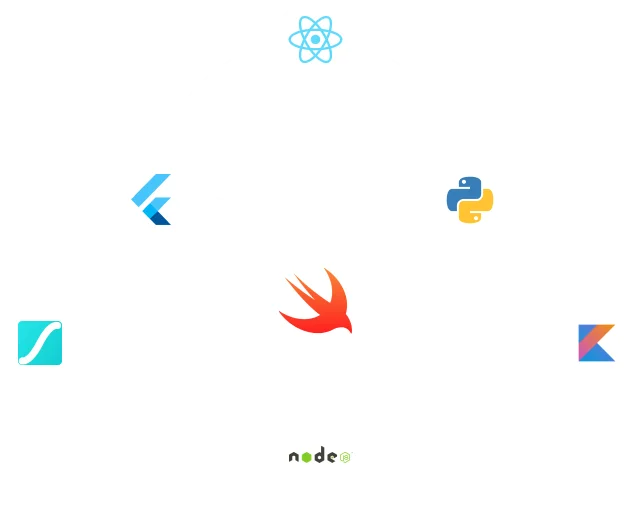
Frontend
iOS: Swift (Native)
Android: Kotlin (Native)
Cross-Platform: Flutter or React Native
Backend
Frameworks: Node.js, Django, or Ruby on Rails
Cloud Providers: Amazon Web Services (AWS) or Google Cloud
Third-Party Services
Payments: Stripe, Razorpay, or Square
Maps & Location: Google Maps API
Notifications & SMS: Twilio or Firebase Cloud Messaging
If you are new to this or working with a tight budget, cross-platform development can be an ideal choice. It strikes the best balance of cost and speed to market. Test your idea first before you put in a lot of money.
Step 5: Hire an Experienced Restaurant App Developer
In this stage, the ball is in your court now. Primarily, you have three options right here. Either way, it is to hire a specialized restaurant app developer.
Sounds great? If not, outsource your project to a reliable freelancer. All in all, ensure whoever you hire has good hands with UI/UX, backend, and integrations.
Also evaluate their past portfolio and technical expertise at any cost. An endless number of firms are out there to lure you with fake promises; don’t let them target you.
Step 6: Design the UI/UX
According to DesignRush, good dish images, menus, and other graphical elements give new life to your app.
Moreover, ensure app users can easily locate what’s required, no matter the prices, signature dishes, or categories.
If an item goes out of stock, your app should clearly indicate it’s unavailable. Beyond this, a winning app leaves no stone unturned.
Don’t forget accessibility basics like readable font sizes, good contrast, and simple navigation.
What we suggest, based on personal experience, is to start with a prototype right now. Once the idea looks worth doing, fix the errors and crush it.
Step 7: Development and Integration
This is the most important yet effort-intensive step in restaurant app development. 50% of the overall project journey takes place.
It spans backend/API work, frontend builds, and admin panel development one after another.
Following that, your app undergoes integration testing. Everything is due: payment gateway integration, order-routing logic, and real-time notifications are assessed.
These are so far the trickiest pieces to get right. If not done properly, expect some extra QA time here.
Step 8: Test Thoroughly Before Launch
Once you finish it, don’t forget to test the quality of your app. For example, check the buttons and user flows.
Ensure each and every functionality is up to the mark. It can be a failed transaction, a refund, or a partial payment.
Furthermore, affirm that the app is competent enough to handle heavy traffic. Sometimes on busy Friday nights or Christmas nights, most apps go out of service.
This is not good, as it destroys your years of effort in retaining clients. Double-check every aspect until you feel it is completely safe.
Step 9: Launch Your App Stores
Now, it’s time to market your app and thrive all over. Just keep in mind that the App Store and Google Play Store have different review rules and timelines.
Apple takes most of the time, in contrast to Google. This is because they check for longer and metadata and screenshots very strictly.
One should always have a one- to two-week buffer around the submission date. Also, ensure you remain ready to deal with any rejections or requested changes.
Step 10: Post-Launch Support and Marketing
If required, you should keep enhancing your app from time to time. This can involve bug fixes and OS-version compatibility.
More than that, features that are good today might not fit tomorrow. Taking all that into account, you can have regular feature updates.
More than that, In-app and email promotion of the app to existing customers (table cards, receipts, social media). Keep in check with what’s working and what isn’t.
Features That Make Restaurant Apps Stand Out Among Others
Features are what make or break the success of your restaurant app. More than that, we deliver a seamless user experience.
Taking that all into account, you must at any cost equip your mobile application with the right capabilities.
Ensure all your restaurant app features work uninterruptedly for customer-facing and back-of-house interfaces.
Must-Have Features
Digital Menu
Search Filters
Online Ordering
Secure Payments
Order Tracking
Table Reservations
Push Notifications
Order Dashboard
Menu Management
Analytics Tools
Live Delivery Tracking
Order History Log
One-Tap Reordering
Advanced Features
Dynamic Surge Pricing
POS System Synchronization
Advanced Analytics
AI Inventory Forecasting
Ticket Status Toggles
Instant Menu Editor
Inventory Availability
In-App Support Tickets
Tiered Loyalty Program
How Much Does It Cost to Build a Restaurant App?
You should expect to pay around 20,000 to 150,000 dollars to create a restaurant app. These numbers change based on feature scope, platform choice, and who’s building it.
Note: Ongoing maintenance (bug fixes, OS updates, hosting) typically runs 15 to 20% of the original build cost per year.
One way is to use our app development cost calculator or follow a quick table. Remember, the numbers we have mentioned are based on existing market rates:
No matter how good a restaurant app developer you are, there is always room for improvement.
Having a live app is not enough. It requires time-to-time changes and enhancements from your end.
Research shows that a bad core, lack of user-friendliness, and a weak backend are key reasons for their failure.
Taking all these factors into account, my suggestion would be to go around them first and then beyond them.
1. Promote In-Store
First of all, one should promote their app on the Play Store or app stores, as it matters most. Remember that your restaurant is your highest-traffic marketing channel.
However, nearly all owners don’t care about it. Ensure every dine-in and takeout customer finds a chance to download your app.
For that purpose, place QR codes on table tents, receipts, window decals, and takeout bags. Moreover, pair it with clear, specific incentives.
If convinced, you’d better train your front-of-house staff. They should be enthusiastic enough to verbally nudge converts.
2. Optimize for App Stores
Go the extra mile to affirm that your app is easy to locate. Those that are hard to find mostly remain unused.
In that case, utilize keywords your customers would actually search. It can be your restaurant name, cuisine type, and neighborhood or city.
Other than that, high-quality screenshots, strong descriptions, and good ratings drastically improve it.
Once time goes by, update screenshots and descriptions as needed. This includes changing major features, conversions, and more.
3. Reward App Users
Among all the best practices of the restaurant app development process, this is so far the ideal one.
You should reward at the very beginning of your application. Let others feel valued when they download your app.
Some of the restaurants in that concern offer deals available only inside the app. Others have a points-based loyalty system.
You can also use push notifications sparingly and strategically. They act as a solid reminder to reach out to users again.
4. Gather & Act on Feedback
Last but not least, an app that stops evolving after launch will slowly lose ground to competitors.
This is why you should keep up to date with all your existing app store ratings and reviews. Never ever try to delete these reviews.
For low-rated or bad reviews, I would recommend responding with an immediate fix.
Besides all that, work with a pragmatic approach. Think outside the box and find out the existing patterns inside your app.
All these suggestions are tried and tested by our seasoned app developers. Hope they work for you too. Based on personal experience, we grew the recent app project to unprecedented heights just by doing this. In the end, the app is what makes things easy for you and your clients. For endless growth, we always suggest that our food chain clients focus on quality.
Challenges You Will Face in Restaurant App Development
Nothing comes easy in everything you do. Following that, while building a restaurant app, there are certain challenges too.
Those who overlook them in the beginning get nothing but disappointment later.
Don’t underestimate this. It simultaneously has to work for the menu, the kitchen, the payment processor, the delivery fleet, and the customers.
So far, we have found around seven different challenges. I recommend addressing each carefully to avoid problems ahead.
1. Overloading the app with features
Most owners try to do everything at the same time, which is very bad for your app.
My suggestion is to start with the must-have features first. Test your idea; if it does, then move to an advanced one.
First, ensure it clearly displays the menus, dishes, pricing, car, and all necessary aspects. When you start growing, go for loyalty, delivery, reservations, live chat, and gamification.
2. Secure payment gateways
Your restaurant app should adhere to PCI-DSS standards, use multiple methods, and handle failures gracefully.
Moreover, your customers are handing over sensitive data. Better avoid risking it due to any negligence.
All in all, any lag between slow ordering due to payment rejection loses you a customer, which is worse for a business.
3. Handling peak-hour traffic
How would you feel when it’s a quiet Tuesday, and your family is starving for food? Or Friday-night rush where guests leave without eating.
To deal with such a concern, I suggest ensuring your backend is solid enough to handle it. Test it thoroughly under peak demands.
Other than that, don’t limit your load testing to just a single platform. Make it work well as required on iOS, Android, and Web.
All this is gonna help you have a solid reputation, avoid worse experiences, and smooth business growth.
4. Protecting customer data and privacy
Your app will collect customer names, addresses, order history, and payment details. All of this falls under very sensitive personal data.
Ensure that during custom restaurant app development, you take care of encryption, secure storage, and clear privacy disclosures.
Remember that no matter how good an app you have, even a minor problem can drive users away.
Bonus Read: Check out our end-to-end restaurant app development guide to hire business all over.
Top 9 Restaurant Apps of All Time to Learn from
It is obvious, yet the wisest way to study is to do things right before you DIY. See where they are too good and where there is room for improvement.
In that case, the apps I have discussed are thoroughly researched. Each of them is good in its own way and serves a specific customer base.
All these precise devices and assets will be made at different angles. What I realized throughout this journey is that no one is flawless.
Some of them were a bit bad to use, had a missing feature, or underserved a segment of customers. The good thing is that we have made it as easy as pie.
Simply use the table below as a reference. See who is who and what is what. Find what works for your app and thrive in the market.
App
Unique Selling Point (USP)
Gap to Target
Starbucks
Order-ahead & gamified rewards
Slow rewards for casual users; needs faster payoffs.
Domino’s
Real-time order tracker
Clunky customization UX; needs cleaner visuals.
Chick-fil-A
Loyalty & ultra-reliable pickup
Weak personalization; should use data proactively.
McDonald’s
Geofenced daily local deals
Interface feels ad-heavy; needs a cleaner UI.
Chipotle
Digital kitchen & pickup lanes
High reward thresholds; needs smaller, faster wins.
Subway
Step-by-step customization
History of app bugs; needs better stability.
Panera
Coffee subscription model
Vague value for non-coffee drinkers; widen perks.
Taco Bell
Gen-Z-first digital experience
Late to the rewards game; must build loyalty early.
Dunkin’
High-speed morning ordering
Repetitive offers need fresh gamified challenges.
Our verdict here is that no one looks perfect, as per our research. All have some good and bad in their existing restaurant app.
For example, Starbucks nails loyalty but overwhelms with complexity. In contrast, Chipotle nails speed but underdelivers on reward pace. Similarly, personalization is what sets McDonald’s apart.
You don’t have to be a copycat. Dive into your business model, target audience, and team needs, and come up with something big. Just keep an eye on the problems they have made, and don’t be the next one among them.
Build Your Restaurant App With Trango Tech!
To be precise, a solid restaurant app takes a pragmatic approach, a solid tech stack, and reliable mobile application developers.
Feature overload, fragile payment security, peak-load scaling, and cross-platform consistency are a few things to take care of.
This is not gonna be easy if you are DIY. Either hire an experienced restaurant app development company or independent coders.
Apart from all that, Trango Tech is far the best choice for owners across New York, California, Austin, and Chicago.
With deep, hands-on experience for businesses of all sizes, we know what it takes to build a restaurant ordering app.
Our success numbers are strong enough to prove our hands-on experience. They include 3,000+ successful projects, with a 95%+ satisfaction rate.
Tired of high commission fees and busy lines? Work with us to get your own seamless ordering setup.
Your customers are already carrying the device. Your next order will come from them; the only question left is whether your app is on it.
Asked Common Questions on How to Build a Restaurant App
Based on apps we have built in the past, it primarily takes 10 to 20 weeks. It starts with initial planning, then development, and ultimately launch. For example, a basic ordering app is easy to build since it takes fewer dev hours and effort. In contrast, complex ones can extend your timelines. Better reach out to us for a fixed project timeline for free.
Your restaurant app, at minimum, needs a digital menu, a working cart, payment processing, and order tracking. To further improve your app experience, you can offer loyalty programs, reservations, and delivery management.
Not really. In fact, most restaurants let one app work for all. It saves them time, effort, cost, and ultimately provides a single unified experience. The best practice is to ensure it combines all required features for restaurants, clients, riders, and admins. This is only recommended when you know how to balance everything. After you know how to create a restaurant app, you can't risk growth.
To build your own restaurant ordering app, it is not possible to simply claim exact prices. As one project is different from another, its costs are too. I suggest you fill out the form available on your website for a fixed quote. Within a matter of hours, we will reach out and discuss restaurant app development costs.
Yes, of course. Most of the reputable restaurant apps do exactly this. They purely focus on order-ahead and pickup. This saves them from the hassle of delivery, as well as managing hundreds of riders. As a matter of fact, when you skip delivery, it reduces your development efforts. All this happened because you spent less on driver management. They want live GPS tracking, AI route optimization, and a lot more.
With your own restaurant app, you can avoid a 15–30% commission per order. Every order is placed through your own app. So all the profits go back into your pockets rather than being shared with others. If done properly, this can be your direct channel. It is going to be one-third cheaper than conventional ways.
Most of our experts recommend using relevant keywords, real screenshots, and real feedback from customers. You might find it a small thing, but as things grow, this is going to be your savior. In this case, it is better to encourage satisfied customers to leave ratings. Review volume and recency directly influence app store search ranking. It has worked for us; I hope it does the same for you.
100% recommended. The existing bigwigs in this niche are doing so if it works. Simply put, a loyalty program works as a psychological reason for users to return. Once they achieve progress, reward it with app-exclusive deals. This is something nearly impossible to do with your own or a third-party platform.
Our recommendation is to look for someone with solid experience, a portfolio, and an in-house team. For more clarity, you can talk to their previous clients for real feedback. Among them, we at Trango Tech stand miles apart from others. Our top-notch quality, experience, and portfolio are enough to surprise you. Reach out to us directly and see your business grow to unprecedented heights.
Daniyal is a passionate content writer & editor with 3+ years of experience crafting SEO-friendly blogs, web copies, and marketing content for an mobile app development company. He loves turning ideas into words that connect, engage, and deliver value. Currently working as a Senior Content Writer at Trango Tech, Daniyal holds a bachelor's degree in English Language and Literature.
Fuel delivery app development typically costs between $5,000 and $150,000+. The range varies along with app type, feature complexity and integration requirements.…
Developing a new application comes with unseen obstacles, like concept failure, financial investment, or technical feasibility. Before investing your hard-earned money, ask…