Every 7th person is facing mental health issues worldwide from the current over 8 billion population.
Approx 97% of users discontinue using popular mental health apps with a 3.3% retention rate.
The mental health app development market is valued at approx $11 billion with a 20% growth rate.
The core categories of mental health apps include mindfulness, addiction recovery, SaMD, corporate wellness apps, mood trackers, and teletherapy platforms.
The mental health app development process includes discovery, team assembly, requirements mapping, design, development, testing, and launch.
The essential mental health app features include self monitoring, secure messaging, emergency access, personalization, peer support, and AI powered tools.
The cost to build a simple MVP ranges between $15,000 and $30,000, a moderate app ranges between $40,000 and $80,000, and a complex app ranges between $100,000 and $150,000.
The monetization strategies of mental health apps include subscription model, freemium, insurance reimbursement, employer partnerships, pay per session, grants and funding.
The DAU/MAU ratio of 20% is considered good and 25% is exceptional.
1 Month churn rate ranges between 3-15% for mental health and fitness apps.
Today, every 1 in 7 people is suffering from mental health issues, totaling over 1 billion individuals. Yet the availability of doctors, high fees, travel, and time remains the biggest bottleneck. Although digital solutions have filled this gap with the global mental health app market size standing at USD 8.64 billion in 2026, the challenge is that over 90% of people stop using mental health apps within a week of installation. This guide explains how to create a mental health app, covering development steps, costs, features, UI/UX design, tech stack, medical compliance, and monetization strategies to overcome this obstacle. To begin, specify your target condition, such as depression, anxiety, or OCD. Consult with experts for clinical validation and adhere to legal mandates like HIPAA, GDPR, or FDA. Developing a mental health app ranges from $15,000 to $150,000 from simple to complex apps. If you want to build an app that actually helps, then you need to understand how to develop a mental health app in detail.
The Mental Health App Market in 2026
As per the commercial market research by Fortune Business Insights, the mental health app market size is valued between USD 8.64 billion and USD 9.45 billion in 2026, with an annual 20% growth rate. This telehealth market is expected to cross USD 35.29 billion by 2034 depending on the performance pattern.
These estimates are especially driven by top mental disorders, depression and anxiety. They both alone account for more than 35% market share.
What is a Mental Health App?
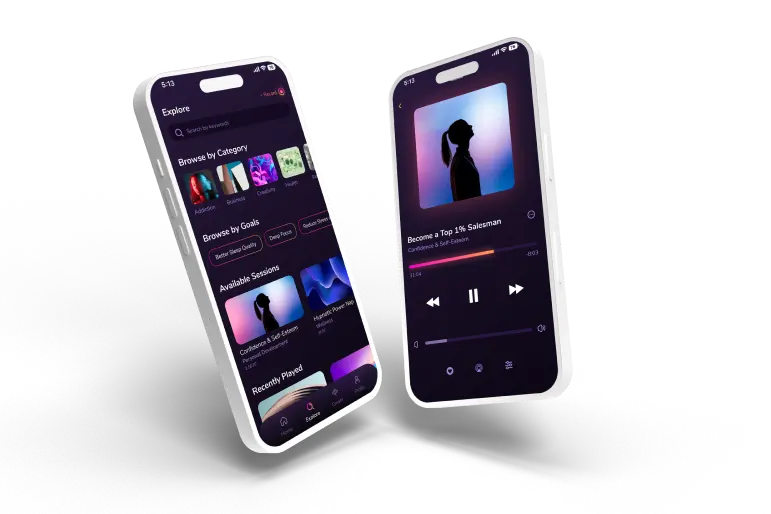
Mental health apps are software tools designed for people to deal with their emotions and mental health. There are different types of mental health apps like stress reduction, teletherapy, meditation, mood tracking, wellness or self care apps.
These apps support emotions, offer healing methods, and help reduce stress or anxiety. Some popular examples include Shifaam, MedIQ, Headspace, Calm, or Epocrates. You can explore the top 20 for growth, wellbeing, and mental health app development.
The core categories of mental health apps are explained below.
Meditation & Mindfulness Apps
These apps are used to improve mental focus, reduce stress, and improve sleep via meditation, breathing exercises, self improvement sessions, and voice coached audios.
Some popular examples include: Sanvello and Insight Timer
Mood & Symptom Trackers
Symptoms and mood trackers work as personal monitoring systems. They utilize wearable integration and data analytics to track daily human emotional logs, physical feelings and share records with practitioners.
Some popular examples include: Moodfit, eMoods and Daylio
Teletherapy & Telepsychiatry Platforms
These are the online platform that connects patients with digital health professionals via video consultations and secure chats. The expert studies behavioral health, counsels, and manages prescriptions. Trango Tech offers secure and custom teletherapy app development services.
Some popular examples include: BetterHelp or Talkspace
Addiction Recovery Apps
These apps help people recover from destructive habits and deteriorating health by helping build healthy habits, track progress and offer mutual support.
Some popular examples include: Nomo and WEconnect
SaMD/Clinically Validated Apps
Clinically validated apps are backed by clinical trials and are FDA approved as SaMD. These Software as medical devices (SaMD) are software used for medical help without being used physically like imaging diagnostics or cloud solutions for telemonitoring.
Some popular examples include: Youper, Wysa, and Woebot
Corporate Wellness Apps
These apps are designed for corporate employees to manage stress and develop healthy habits at the workplace. Corporate wellness apps feature team challenges and physical and mental exercises.
Some popular examples include: Personify Health, Wellable, and Wellness360
Creating a Mental Health App that Matches Your Goal (Decision Framework)
Goal
App Type
Main Features
To reduce stress
Meditation & Mindfulness
Guides, exercises, and sleeping sound
To manage chronic disease
Mood & Symptom Trackers
Data charts, symptoms, recognition, and journaling
For Professional help
Teletherapy & Telepsychiatry
Video calls, audios, and end-to-end encryption chats
To quit bad eating habits
Addiction Recovery
Recovery trackers, discussion boards, and ongoing preventions
To treat diagnosed disease
Clinically Validated / SaMD
Evidence-based CBT modules and clinical study
For worker health improvement
Corporate Wellness
HR dashboards and engagement perks
How to Create a Mental Health App: Step-by-Step Process
There are many agencies offering mental and emotional wellbeing software programs in the US. Trango Tech is a offering software services that follow a structured pattern of discovery, design, development, testing, launch, and maintenance while adhering to laws and regulations. The development timeline takes 3 to 18+ months ranging from basic to complex apps.
1. Discovery & Audience Research
First, define the project scope either medication, wellness tracking, or online consultation and target the ideal audience.
Talk with medical experts for app requirements favoring users’ needs for smooth workflows.
Ensure adherence to compliance, plan for GDPR, FDA, MDR, HITECH Act, Hl7, CFR 42 Part 2, and HIPAA compliant mental health apps before starting development.
2. Team Assembly
Gathering the right mental health app developers team is crucial for successful application development.
The involvement of multidisciplinary groups’ expertise is required, including medical, technical, and compliance specialists.
The core team members are product managers, QA engineers, cybersecurity experts, backend developers, and UX and UI designers.
3. Requirements & Compliance Mapping
In order to deploy a mental health app successfully, ensure you meet the legal requirements, data residency, health regulations and laws. Follow the rules below as required:
FHIR is a technical standard tool for data sharing
LOINC is used for medical lab report identification
4. UX/UI Design
Build the black and white layout of the app before applying colors with the help of wireframes for a better visual hierarchy.
Keep in mind color therapy; focus on soft contrasts, easy to read text, and simple navigation. Make a single tap emergency help button clearly visible to all.
Meet WCAG standards to provide ease to people with disabilities for smooth UX/UI accessibility.
5. Development & Testing
First, build the MVP with primary mental health app features like mood tracking, emergency services, and CBT (cognitive behavioral therapy) for a talk therapy session.
Set up frontend coding elements like interactive visuals, buttons, and other user interfaces and set up backend coding secure servers for user profiles.
Qualify the app with repeated operating cycles of 2 to 4 weeks long agile sprints and test healthcare software section by section with security audits, penetration tests, and conduct usability testing before official launch.
6. Launch & Post-Launch Monitoring
Now release the app on both the App Store and Google Play. Keep tracking the performance with daily checks, watch for crashes, bugs, and app hanging issues.
Make the most of support tickets and user feedback to find the difficulties faced by users while using the app.
Conduct post launch monitoring to address the occurring issues on the go. You can get this benefit with Trango Tech; we offer a 3 months FREE post launch maintenance program.
Must-Have Features for Creating a Mental Health App
A successful mental health app features essential components like self monitoring, secure eHealthcare, and crisis first aid tools. Each feature is supported with transparent personalization and responsible AI protocols.
Self-Monitoring & Mood Tracking
Self management and mood tracking are the base of mental health app development. Emotion recognition is a core feature; it collects data and provides live physiological insights.
Another useful feature is ACT (acceptance and commitment therapy). It is an action oriented type of psychotherapy that motivates patients to let their thoughts out rather than suppressing them in their minds.
Telehealth & Secure Messaging
In order to protect sensitive and confidential data, enable features like multi-factor authentication (MFA) and biometric authentication.
Encrypt all communication channels between the patient and the doctor. Provide automated options like appointment scheduling in advance or notes taking during the live session.
Crisis Intervention & Emergency Access
As per WHO data, about 720,000 people attempt suicide every year. Provide immediate help with easy to find and one tap emergency buttons or contact for suicide cases in America.
Insert intelligent statistical prediction to measure the risk of case severity as per user behavior. Provide instant in person support rather than automated text messages.
Personalization & Gamification
Enable informed consent in a mental health personalization feature to ensure data disclosure and individual independence.
Include positive behavior encouragement rewards, points, or badges with the completion of stable mental health daily tasks.
Community & Peer Support
People facing the same difficulties or shared struggles can be provided mutual support via safe communications. As per PMC, mobile apps support mental health response in natural disasters.
Providing financial stability with telehealth reimbursement, this feature allows mental health experts to get paid by insurance and expand user access.
AI-Driven Features
Provide 24/7 support with conversational chatbots, use predictive analytics to eliminate life risks, and generative AI for smart AI help like custom exercise and daily temper summarization.
Recommend activities based on PHI (protected health information). Above all, AI cannot replace humans; always connect a human agent instantly based on case severity.
MVP Feature Scope:
Below is a quick features checklist for mandatory, optional and advanced MVPs.
Features
Must Have
Nice to Have
Advanced/SaMD only
Self monitoring
Basic mood tracking
Labeling activators and flexible window time
Continuous wearable synchronization
Telehealth
Basic secure chatting
Push alerts
EHR integration
Crisis Intervention
Easy to find emergency help
Location based emergency channeling
Live risk detection tools
Personalization
Mutual objectives
Basic content recommendation
Personalized health algorithms
Community
Static peer support
Collective hurdle sharing
Reasonable multiuser sessions
AI Features
Faqs or query tools
Simple conversational chatbots
FBA approved SaMD
Top healthcare app ideas include teletherapy app development, women’s healthcare apps, doctors on demand app, medical app store, and others. If you are planning to build one, then tell us your target audience; we will design your project roadmap.
Tech Stack for Mental Health App Development
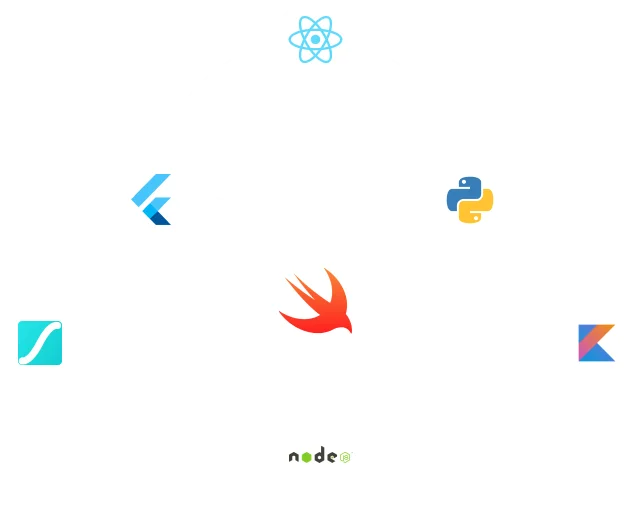
A modern technology stack primarily requires frontend, backend, and database layers for an operational HIPAA compliant mental health app development. The purpose of React Native, Node.js, and PostgreSQL is highlighted below.
Tech Layer
Recommend Stack
What is the Role of Tool Chain
Frontend
React Native, Flutter, Swift
For fast and smooth app run
Backend
Python, Node.js
For data handling, security, and advanced features
To embrace an automated conversation like a real person
Other than that, GCP provides safe data infrastructure and AI based health analytics; HL7 generates rules for data exchange, and SNOMED CT and RxNorm support a collection of health records for EHR interoperability.
How to develop a mental health app with an obligation to compliance? Data storage and transit are secured via AES-256, TLS, PHI, and the ISO 27001 ISMS framework. The respective party must sign legal agreements (BAA) with cloud providers such as HIPAA-compliant cloud providers.
Core Regulatory Frameworks for US and EU
Adherence to HIPAA, GDPR, and FDR is crucial for US and EU regulations.
A HIPAA compliant mental health app is a mandatory law requirement that is used for privacy and security rules. It shields users’ health data, provides safe storage, and requires BAAs in the US.
GDPR protects personal data, gives users access to either keep or delete their private data, and requires data consent in the EU.
FDR and MDR regulate all medical devices, software validation, risk mitigation, and audit reporting.
ISO 13485 ensures product safety & provides a framework of QMS in both the EU and US.
Other than that, SAMHSA is a government agency leading public health programs to treat mental illness and CDC provides data centralization and corporate wellness programs in the US.
You can find the mandatory guidelines of international rules and regulations for the UK, Canada, and Australia below:
Data Protection Act is the same as EU GDPR with supervision in the UK
PIPEDA is a privacy law that requires consent before using or sharing the information in Canada.
Privacy Act and TGA govern medical devices and confidential data management via digital therapeutics (DTx) in Australia.
Addition of new clinical validation DSM-5 involves field experiments and literature for test soundness. It is a guide for doctors and health experts for medical condition recognition. Whereas, WHO is expanding mental health support with general health care in hospitals by delegating tasks to general practitioners globally.
How Much Does it Cost to Build a Mental Health App?
The cost to develop a healthcare app, mental and wellness app ranges between $15,000 and $150,000; this range is influenced by app complexity level, project scope, budget, and compliance requirements.
Find a quick cost breakdown of simple, moderate, and complex mental health apps.
App Complexity Level
Cost Breakdown
Development Timeline
MVP (Simple)
$15,000 – $30,000
2 to 4 months
Mid-Tier (Moderate)
$40,000 – $80,000
4 to 8 months
SaMD Grade (Complex)
$100,000 – $150,000
8 to 14+ months
Hidden Costs
There are several factors leading to ongoing costs of mental healthcare app development. Such as:
Hosting includes compliance infrastructure, 3rd party integrations, and secured backups and ranges between $200 and $2,000+ per month.
Compliance audit charges range between $10,000 and $50,000 for additional certifications.
AI retraining and monitoring range between $1,000 and $5,000 in medical healthcare.
Medical maintenance in mental health care ranges between $5,000 and $40,000+
Clinical review boards require a license fee ranging between $500 and $3,100.
Build vs. Buy vs. White Label
There are three options when it comes to the question: how to create a mental health app? You choose between a personalized build, Off the Shelf SaaS, and rebrand ready made solutions as your product.
Find the quick comparison below of each.
Factors
Custom Build
Buy (Already Made)
White Label Solution
Cost
$15,000 – $150,000
$39 – $400+ / month
$5,000 – $30,000+ / month
Timeline
6 to 24 months
1 week
2 to 12 weeks
Best For
Enterprises
Solo practitioners
Startups
Common Challenges for Creating A Mental Health App
Below are the common challenges faced when developing a mental health app and creating hurdles in users’ retention.
1. Trust & Clinical Credibility
Challenge: The biggest challenge is trust and clinical credibility that doctors and patients face while keeping data safe.
Solution: Overcome trust issues with scientific proof, experience, and robust adherence to privacy laws.
2. Regulatory Complexity
Challenge: Regulations like HIPAA and FDA are quite complex and strict compliance requires expertise and deep knowledge.
Solution: The best solution is to hire a healthcare expert to crack the compliance needs into your app architecture.
3. Retention/Engagement
Challenge: As per recent studies, people quit using healthcare apps after a few installs.
Solution: Control user retention with rewards, provide personal tips, and make the app easy to use and understand.
4. Ethical AI & Dark Pattern Avoidance
Challenge: Unfair results in lost trust; the AI should share results without hidden tricks.
Solution: Audit AI for fair results and test among different groups for unbiased results with honest limits
How to Monetize a Mental Health App
There are 6 ways to make money from mental health apps. Use the following mental health app monetization strategies for profit generation.
1. Subscription Model
Charge app users on a monthly basis for specific features like sleeping sounds or a mood tracker.
2. Freemium
Keep some features for free and set the rest to unlock with purchase programs, like real time coaching or special content.
3. Insurance Reimbursement
Get partnered with the insurance companies and earn money when users use their coverage to pay for the app.
4. Employer Partnerships
Use employer partnerships, sell your services to several employers and charge them per employer per month.
5. Pay Per Session
You can also directly charge your user by providing one on one video consultations with healthcare experts or therapists via Stripe Connect.
6. Grants & Funding
With the help of the government, charities, and foundations earn grants and funds for your mental health app.
Post-Launch Growth of Healthcare and Mental Apps
Below are the regulated healthcare and mental apps retention and churn benchmarks, and elaborating on App Store optimization tips to maximize app growth.
Retention & Churn Benchmark
Day 1 Retention:25-26% (it reflects onboarding and introductory values)
Day 7 Retention: 11-13% (it shows habit and early engagement)
Day 30 Retention: 5-7% (it tell the market fit of the product)
DAU/MAU: 20% is considered good and 25% exceptional
1 Month Churn Rate: 3-15% for mental health and fitness apps
App Store Optimization (ASO) Tips
Optimize the main keyword and function in the app title for visuals and trust.
Clearly mention your ideal audience, what the app does and who it is developed for.
Add medical disclaimers as per your regional requirements.
Quickly fix errors with updates for user retention and a high customer satisfaction rate.
Update your app in a timely manner as per regulatory requirements and new policies.
Real World Examples
Many successful app owners started their journey from: how to create a mental health app? And ended with developing conversational support, guided content, and telehealth apps serving a large number of users globally. Some popular real world examples include Headspace as a lifelong mental health guide, Wysa to talk out your emotions and feelings, and Talkspace for consultation with licensed therapists.
If you want to add your mental health app name to the popular and successful apps worldwide, then we can help you build a mental health and teletherapy app development.
Frequently Asked Questions
A helpful mental health app features for patients include easy appointment booking, encrypted consultations, personalized dashboards, medication reminders, online prescriptions, wellness tracking, multilingual support, and instant chat. For doctors, key features include customized IDs, authorization control, a telemedicine module, clinical notes, and EHR integrations. For administrative employees, the compulsory features include a centralized dashboard, staff management, inventory control, automated billing, performance reports, and system notifications.
The mental health app development ranges between $15,000 and $150,000, varying with complexity level. Simple apps or MVPs range between $15,000 and $30,000, moderate apps range between $40,000 and $80,000, and complex medical apps range between $100,000 and $150,000+.
Not directly! HIPAA is a law designed to protect users' private data. Apps must meet all the requirements provided by the regulatory body for successful deployment. HIPAA compliant mental health app is only developed when it meets robust data encryption, a signed business associate agreement, and allows access with permissions.
The mental health app development timeframe varies with the level of complexity, app requirements, project scope, and business goals. Typically, basic apps take 2 to 4 months in development, whereas intermediate apps take 4 to 8 months, and SaMD or complex hospital apps take 8 to 14+ months in development.
Mental health apps make money with these monetization strategies: subscription model, freemium, insurance reimbursement, employer partnerships, pay per session, grants and funding.
There is a list of steps answered in a smooth flow for how to create a mental health app. Starting from the discovery of a project, conducting audience research, assigning a team, mapping out the app and compliance requirements, then designing the UX/UI needs, and starting app development along with testing. Finally, launch the app and keep monitoring the app after release.
Maham is an experienced B2B and B2C SEO content and copywriter with over 4 years of experience writing high-converting articles, emails, sales pages, landing pages, blog posts, and social media ads. She is an industry expert writer and storyteller who creates compelling content and covers diverse niches, including SAAS tools, mobile app development, e-commerce, lifestyle, health and wellness, self-improvement, consumer products, political and cultural commentary, while maintaining a genuine human-to-human connection. You can find her on LinkedIn @MahamHanif
Legacy app modernization is simply a process of refactoring and updating the old software systems to use modern frameworks, architectures, and infrastructures.…







![How to Create a Restaurant App from Scratch? [2026 Guide]](https://application.trangotech.com/wp-content/uploads/2026/09/featrue-img-01-768x350.webp "How to Create a Restaurant App from Scratch? [2026 Guide] 18")